
MOLD REMEDIATION
Mold grows where moisture stays. HVDR finds where the water is coming from, dries the structure, removes the affected materials and can rebuild afterward. The inspection is free.
Call (845) 600-0854Email office@hvdr.netFree inspection. Insurance claim documentation included.
WHY IT GROWS
Where mold in Newburgh homes comes from
Mold needs moisture, and most homes have a few places where it can collect. These are the sources we find most often.
Past water damage
Leaks and floods that were never fully dried leave moisture in walls and under floors. See our Newburgh water damage page.
Damp basements
Seepage, high humidity and poor drainage keep basement walls and stored items damp for long periods.
Roof and attic leaks
Slow roof leaks and poor ventilation wet insulation and framing where no one is looking.
Plumbing leaks behind walls
A small supply or drain leak can feed mold inside a wall for months before a stain shows.
Condensation and humidity
Bathrooms, kitchens and closed-up rooms without enough ventilation stay damp and grow mold on surfaces.
Flooding and storm water
Flood water that sits in a building for more than a day or two gives mold the conditions it needs.
Newburgh sits on the Hudson River, and Quassaick Creek runs through the area. A 2024 study from Cornell and the New York State Water Resources Institute modeled flood risk along part of the creek. Low-lying basements near water can stay damp after storms, and that is when mold gets started. Cleaning mold without fixing the moisture only buys time. The mold comes back if the wet source is still there, so we start by finding the water.
DO THIS FIRST
If you see or smell mold
- Do not disturb it. Brushing, sanding or dry-wiping can spread spores into the rest of the house.
- Do not paint or spray over it. That hides the problem but does not remove it or fix the moisture.
- Find and stop the water source if you can do it safely, such as a leaking pipe or a wet area.
- Keep fans and air flow away from the area so spores are not pushed into other rooms.
- Stay out if you have breathing problems or a weakened immune system. Talk to your doctor about any health concerns.
- Take photos and note when you first saw or smelled it.
- Call us for an inspection. We will tell you what we find and what the job needs.
WHY SPEED MATTERS
Why mold cannot wait
OUR PROCESS
What happens when we arrive
- Inspection and moisture check.
We look for visible mold and use moisture meters to find wet materials and the source of the water.
- Containment.
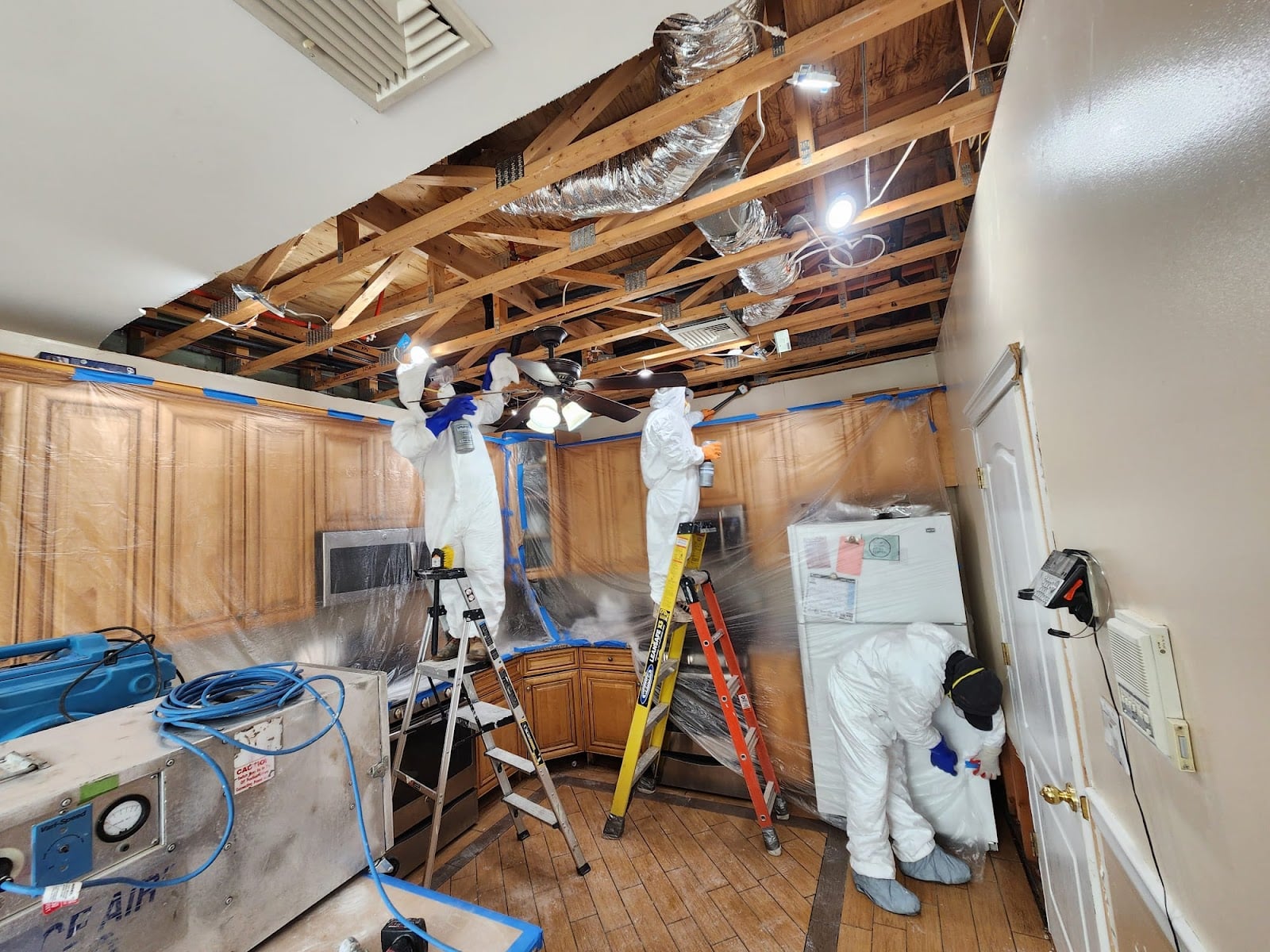
Plastic barriers and controlled airflow help keep spores from spreading to clean areas.
- Removal of affected materials.
Mold-damaged porous materials like drywall and insulation are carefully removed and bagged.
- Air filtration and cleaning.
HEPA air filtration and cleaning of remaining surfaces remove spores and dust from the work area.
- Drying.
The structure is dried to normal moisture levels so mold does not return.
- Repairs.
HVDR can rebuild walls, ceilings and flooring after the work is finished.
NEW YORK MOLD LAW
What New York law says about mold work
New York regulates mold work under Article 32 of the State Labor Law. A mold project covering more than ten square feet must be handled by licensed mold professionals. The law also keeps the two jobs separate: the same person cannot own both the company that assesses the mold and the company that removes it on the same property.
The Department of Labor does not require homeowners to clean up mold. If you do hire a company for a larger project, ask for their New York State mold license and check it with the Department of Labor mold program. We will tell you plainly when a project is big enough to need licensed mold professionals. The IICRC also publishes ANSI/IICRC S520, the standard for professional mold remediation.
INSURANCE AND COST
Insurance claims and what affects the cost
Whether insurance covers mold depends on your policy and what caused the moisture, so ask your agent early. We document the problem with photos and moisture readings and give you a clear scope of work to share with your insurer.
The cost depends on how much area is affected, what materials are involved, whether the moisture source has been fixed and how much repair is needed afterward. A free inspection lets us tell you what your situation needs before you decide.
OUR WORK
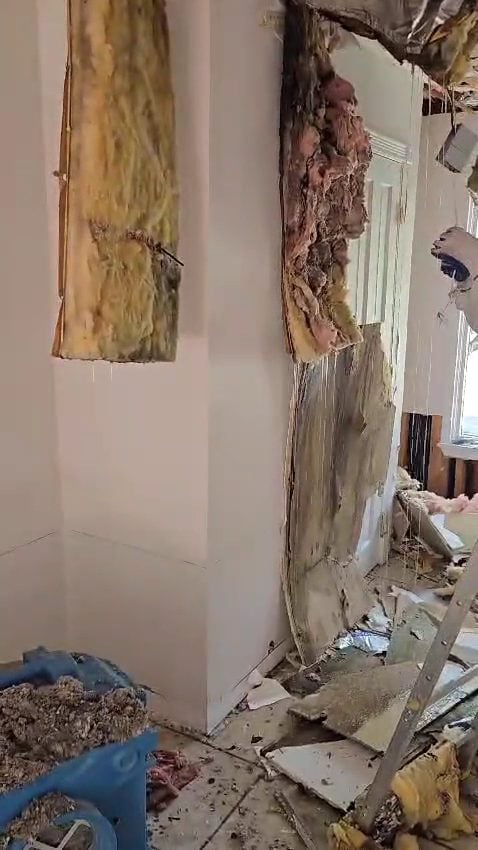
Restoration jobs we have handled
REVIEWS
What customers say about HVDR
QUESTIONS
Mold remediation in Newburgh: common questions
Is mold dangerous?
Mold can cause irritation and allergy-like symptoms in some people, and it damages the materials it grows on. If anyone in the home has health concerns, talk to a doctor.
Can I just clean it with bleach?
A small patch of surface mold on a hard surface can often be cleaned by a homeowner. Mold in walls, on porous materials or over a large area needs a professional, and bleach does not fix the moisture behind it.
Why does mold keep coming back?
Almost always because the moisture source is still there. Finding and fixing the water is part of getting rid of mold for good.
Do you test for mold?
We can tell you what we find during an inspection. For a larger project in New York, a formal mold assessment has to come from a licensed assessor who is separate from the company doing the removal.
Does insurance cover mold removal?
It depends on your policy and what caused the moisture. We document the damage and give you a scope of work for your insurer, who decides what is covered.
Can you rebuild after the mold is removed?
Yes. HVDR handles drying and rebuilding, so you deal with one team from the first call to the finished repair.
AREAS
Serving Newburgh and Orange County
HVDR serves Orange County and the wider Hudson Valley. Call the same 24/7 line from Newburgh or a nearby town. See our Orange County restoration page, emergency restoration in Orange County and the full service area. Also in Newburgh: water damage restoration and fire and smoke damage restoration.
Related services: mold remediation, Middletown, Goshen and all services.
Mold in your Newburgh home?
Call HVDR any hour or book a free inspection. We will tell you what is going on and what the fix involves.
Call (845) 600-0854